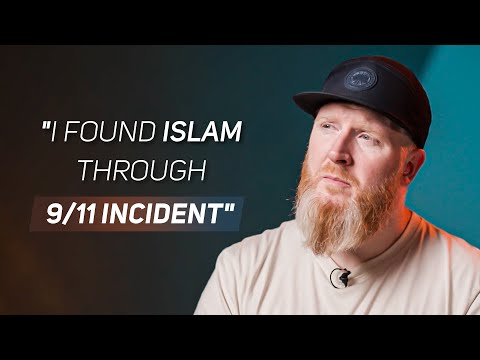
🌍 From Manchester to Mecca: The Inspiring Journey of John Fontain to Islam
🧒 Early Life in Manchester
John Fontain was born and raised in Manchester, England, a city known for its vibrant multiculturalism, deep industrial roots, and dynamic music and arts scenes. Growing up in a Christian household, John, like many young people in the West, was immersed in the typical British lifestyle—socializing, chasing worldly ambitions, and rarely questioning the faith traditions handed down to him.
Despite being raised in a religious environment, John describes his early beliefs as superficial. “I believed in God,” he once shared, “but I didn’t know who God really was. My belief was more cultural than spiritual.” His understanding of religion lacked depth, and his spiritual life was more ritualistic than meaningful.
❓ Doubts Begin to Creep In
As John entered his late teens and early twenties, he began to feel a disconnect between the teachings of his faith and the realities of life. The contradictions he encountered within Christian doctrine—particularly the concept of the Trinity and original sin—left him with more questions than answers. “How can God be three in one? Why would God need to sacrifice himself for our sins?” These were the questions that deeply troubled him.
He also became increasingly uncomfortable with the idea that salvation was exclusive and unconditional—dependent only on belief rather than deeds. This discomfort sowed the seeds of doubt in his heart. Yet, he continued to explore various Christian denominations and interpretations, hoping to find clarity. But the more he searched, the more lost he felt.
🌍 A Journey to Africa and Unexpected Encounters
At a pivotal point in his life, John took a trip to Senegal in West Africa. This trip, meant to be more of a cultural exploration, turned out to be one of the most transformative experiences of his life. There, he encountered Muslims for the first time in a truly personal and profound way.
What struck him was not only the kindness and hospitality of the people but also their unwavering dedication to God. He observed how ordinary people—taxi drivers, street vendors, farmers—paused everything they were doing five times a day to pray. Their devotion was quiet, consistent, and without spectacle. This was a completely different model of religious life from what he had seen in his own upbringing.
🧲 Attraction Towards Islam
John began to feel an inexplicable pull toward Islam. The discipline, the clarity of belief in one God, and the strong emphasis on individual accountability all deeply resonated with him. Unlike the ambiguity he experienced in Christianity, Islam offered a straightforward theology: God is One, without partner or intermediary.
He also admired the way Islam integrated faith into every aspect of life—from eating and sleeping to financial dealings and community welfare. Islam wasn’t just a Sunday religion—it was a comprehensive way of life.
🧠 Intellectual Curiosity Turns Into Spiritual Quest
Upon returning to the UK, John’s curiosity turned into a serious quest. He began to read the Qur’an, watch lectures online, and meet with Muslims to ask questions. He encountered figures like Zakir Naik, Ahmed Deedat, and Hamza Tzortzis, whose arguments for the rationality of Islam appealed to him intellectually.
“For the first time,” he recalls, “I found a faith that encouraged thinking, reasoning, and questioning. Islam didn't just say ‘believe,’ it said ‘reflect.’”
John was also impressed by the Prophet Muhammad ﷺ. He was amazed at how one man, over 1,400 years ago, was able to reform a society riddled with tribalism, alcoholism, and injustice through a message of monotheism, compassion, and social justice.
📿 The Moment of Shahada
After months of internal struggle and research, John accepted Islam quietly, alone in his room. “It wasn’t a public moment,” he says. “I just knew in my heart that I had found the truth.” He later took his official shahada (testimony of faith) in front of witnesses at a mosque.
That moment marked the beginning of a completely new life. Gone were the nights of aimless partying and the days filled with confusion. In their place came peace, purpose, and a profound connection to God. For John, becoming Muslim wasn’t about joining a new religion—it was about reconnecting with his Creator in the most sincere way possible.
👨👩👧 Reactions from Family and Friends
Like many converts, John’s new identity came with social consequences. His family, while not hostile, was deeply concerned. “They didn’t understand why I had changed so suddenly,” he explains. “To them, Islam was foreign, even frightening.”
Some friends distanced themselves, while others mocked his decision. Yet over time, as they saw his consistency, character improvement, and unwavering faith, many of them began to respect, and even admire, his transformation.
🧗♂️ Challenges After Conversion
The early days as a new Muslim weren’t easy. John had to adjust to a whole new way of life: learning how to pray, understanding halal dietary laws, fasting during Ramadan, and navigating a new spiritual and social identity. But he also felt incredibly supported by the Muslim community, who embraced him as a brother.
“One of the biggest challenges was unlearning the misconceptions I had picked up over the years,” John admits. “The media painted Islam as harsh and backward. But living it revealed its mercy and beauty.”
🌟 The Prophet Muhammad ﷺ: A Role Model
John speaks passionately about his admiration for the Prophet Muhammad ﷺ. “What impressed me most was his character,” he shares. “He was kind, just, patient, and deeply concerned for humanity.”
The more John studied his life—the Prophet’s treatment of the poor, women, animals, and even his enemies—the more he was convinced of the divine origin of Islam. “No man could have achieved what he did without divine guidance.”
🎯 Life Purpose Before and After Islam
Before Islam, John describes his life as one without real direction. Success was defined by material gain, social approval, and temporary pleasures. But Islam redefined his purpose: to worship God, seek knowledge, and serve humanity.
“Now I wake up every day knowing why I’m alive,” he says. “Life has meaning, and every action can be an act of worship if done with the right intention.”
📺 Current Projects and Dawah Work
Today, John Fontain is an active da’ee (Islamic preacher), YouTuber, and speaker. He has traveled around the world sharing his story and engaging in interfaith dialogues. His channel features interviews, Islamic reminders, and educational content aimed at both Muslims and non-Muslims.
He has also worked on documentaries and authored content to counter Islamophobia and misconceptions about Islam. His outreach is especially impactful because he speaks from experience—someone who doubted, questioned, and eventually embraced the faith after deep inquiry.
🎙️ His Message to Non-Muslims
When asked what he would say to all the non-Muslims in the world, John is direct but compassionate: “Don’t judge Islam by the media or by Muslims—judge it by the Qur’an and the Prophet Muhammad ﷺ. Read for yourself. Ask questions. Seek truth.”
He emphasizes that Islam is not a religion of blind faith, but one that encourages critical thinking and evidence-based belief. “If you’re sincere,” he says, “God will guide you.”
🗨️ Final Reflections
John Fontain’s story is a powerful reminder that guidance can come from unexpected places. From a Manchester native caught in the distractions of modern life, to a practicing Muslim spreading the message of Islam across the globe—his life illustrates the transformative power of faith, sincerity, and perseverance.
“Islam didn’t just change my beliefs,” he reflects. “It changed my heart, my priorities, and my entire worldview.”
His journey encourages Muslims to value their faith more deeply and invites non-Muslims to explore Islam with an open mind and sincere heart. For John, the search for truth led him not just to a religion, but to a complete way of life—and a deep, enduring peace. 🕊️
Comments
Post a Comment