[🎬] Convert Story: Former Anti-Islam Politician Became Muslim! How He Accepted Islam! @LEGACYB2BMEDIA
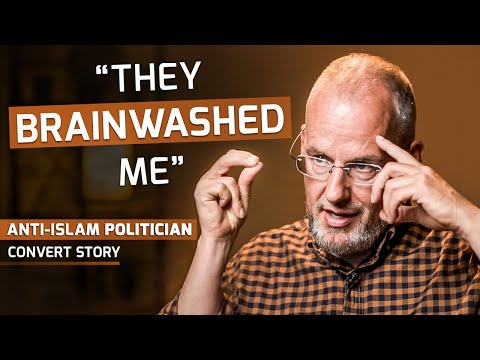
🎬 From Vocal Anti‑Islam Politician to Muslim Advocate: The Remarkable Turnaround of Joram van Klaveren
✨ A Journey Defined by Transformation
Joram van Klaveren’s life has been dramatically reshaped by one of the most powerful stories of intellectual and spiritual transformation in recent history. As a high‑profile Dutch politician with the far‑right Party for Freedom, he was once fervent in his opposition to Islam, advocating bans on the Quran, mosques, and burqas. He vocally described Islam as a dangerous threat to Western values and led campaigns designed to keep Muslim influence at bay. But then came an unexpected turn: while writing a critical book about Islam, he found himself drawn into Islamic texts and theology to a degree he never anticipated—so much so that eventually he became a Muslim himself.
This article explores the winding path that led a vocal opponent of Islam to the Islamic faith itself. It delves into his political trajectory, the pivotal intellectual crisis he experienced, his moment of spiritual awakening, the backlash he faced, and his ongoing work as a conservative yet compassionate advocate for interfaith understanding.
👤 From Childhood Roots to Political Prominence
Born and raised in Amsterdam in the late 1970s, Joram grew up in a deeply religious Protestant family. His youth was shaped by church, prayer, and conservative values. As he grew older, he credited his upbringing with shaping his early political stance against what he perceived to be religious threats. He joined the Party for Freedom (PVV), led by Geert Wilders, where he quickly rose to national influence as a parliamentary member. In those years, van Klaveren became known for his fiery speeches, arguing vehemently against immigration from Muslim-majority countries and calling for policies to protect Dutch culture.
The PVV’s agenda was unapologetically anti-Islam, and van Klaveren didn’t shy away from incendiary language. He made headlines calling the Quran “poison” and advocated banning Islamic schools and public symbols like the hijab and minarets. His voice resonated with voters worried about preserving Western identity, but he also drew scorn from liberal circles and accusations of xenophobia.
📖 A Critical Inquiry Begins
After several years in politics, van Klaveren began questioning the rigid stance of his party. He criticized the rise of overt Islamophobia within PVV and left in the mid-2010s. He embarked on writing a comprehensive critique of Islam—partly as a scholarly challenge, partly out of lingering opposition. His central aim was to craft a rigorously researched argument to substantiate his convictions.
To do this, he reached out to both Christian theologians and Muslim scholars, eager to engage with Muslim perspectives directly. He read the Quran in Arabic and studied classical exegesis, while deeply examining biblical theology. He published articles and spoke at Christian forums that critiqued Islam’s theological premises. What he didn't foresee was that this deep intellectual engagement would crack the very foundation of his anti-Islam beliefs.
🧠 The Moment of Intellectual Whiplash
One simple yet powerful moment triggered an intellectual and emotional cascade. In his living room, a bookshelf unexpectedly collapsed, scattering books across the floor—one of which was a Quran open at a verse emphasizing that what shuts the heart can also blind the eyes. To van Klaveren, this felt like a divine wake-up call. He reflected on a life of harsh statements and studied claims that had gone unexamined. It was here, amid the chaos of that fallen bookshelf, that he faced a startling realization: if Islamic doctrine aligned with reason and moral integrity the same way Christian theology had, would he himself be a Muslim?
This internal reckoning led to months of spiritual turbulence. As he continued to research Islam, the doctrine of monotheism (Tawheed) resonated with his core intuitions. He saw a theological coherence in Islamic scripture—direct, unmediated, and responsive to deep philosophical questions around the nature of God, justice, and human purpose. Van Klaveren began to feel as though he had fallen into a deeper well of truth than he ever expected.
🕋 Embracing Islam: A Quiet Renewal
Up to this point, van Klaveren’s journey had been intensely personal and intellectual. The final step was taking the Shahada—the Islamic testimony of faith. He has described this moment as profoundly liberating rather than crippling. While it didn't erase his past, it reframed it. With the Shahada came both gravity and relief—a step forward with humility, guided by conviction.
To mark his conversion, he chose to go public in early 2019. The news shocked the Netherlands. A former face of PVV had embraced Islam. Some speculated it was a publicity stunt; others hoped it might be a force for goodwill and interfaith reconciliation. In any case, the announcement drew intense media attention and sparked debate in political and religious circles across Europe.
🌪 Backlash and Support: A Nation Reacts
Not surprisingly, the reaction was fierce. Former allies were quick to dismiss him, including Geert Wilders who dubbed his conversion laughable. Online commentators mocked him, and some former PVV members called him a traitor. Van Klaveren and his family even received death threats. The wave of abuse escalated both online and offline.
At the same time, support began to pour in—from unexpected quarters and from Muslims who saw a rare opportunity to disprove prejudice. He received invitations to speak in mosques, interviews with interfaith groups, and help from Muslims around the country. The Muslim community rallied to welcome him with warmth and patience—an act of compassion that many believe silenced critics more than any rebuttal could.
🚀 From Critic to Educator: Harnessing Knowledge for Peace
After settling into his new life, van Klaveren launched the Islam Experience Center in Rotterdam—a groundbreaking initiative that combines virtual reality exhibits with on-site programs to educate the public about Muslim history, practice, and culture. It's designed to be immersive, empathetic, and educational—aiming not just to inform but to transform public perception.
He also tours the Netherlands as a speaker, sharing his story in forums that span universities, community centers, and think tanks. His focus? Encourage deep listening and dialogue, and repurpose the argument from fear to understanding. His activism is rooted in conservative values, but now filtered through empathy rather than suspicion.
💡 Reflections and Words of Wisdom
Van Klaveren offers a unique set of recommendations for intellectuals, politicians, and reverts:
- Question inherited beliefs with genuine curiosity and intellectual honesty.
- Reject any form of faith that cannot stand up to scholarly scrutiny.
- Prioritize building inclusive institutions over confronting individuals.
- Engage your family in any transformative journey to foster patience and unity.
- Let empathy guide policy, not fear.
His insights are frequently cited in discussions of religious transition and social integration in Europe.
📊 A Journey Summary
- Origins: Politician with anti-Islam agenda.
- Study: Aimed to critique Islam but found intellectual integrity instead.
- Turning point: An incidental Quran verse triggered spiritual reevaluation.
- Conversion: Shahada taken in 2019, publicly declared.
- Aftermath: Education, interfaith activism, and new commitments rooted in Islam.
🌍 Why His Transformation Resonates
The story of Joram van Klaveren is a stark reminder of the transformative power held by sincere inquiry. In an age of polarisation, it stands as a living testament to one person’s capacity to pivot from fear to understanding. It challenges us to balance conviction with humility and invites open-hearted engagement with those we may have dismissed.
His life highlights that truth, when encountered with an open mind and heart, can lead to profound change—political, spiritual, and personal.
📝 Final Thoughts
Joram van Klaveren’s transition from spokesperson for anti‑Islam rhetoric to Islamic advocate is both fascinating and hopeful. It demonstrates that no matter how far someone has walked down a path of prejudice, true knowledge can redirect hearts toward empathy and enlightenment. His work now stands as a call for regard over rejection, reflection over rhetoric, and sincere dialogue over divisiveness.
May his journey encourage others to question boldly, learn honestly, and embrace humanity with dignity and compassion. Ameen. 🤲✨
Comments
Post a Comment